Executive Summary↑
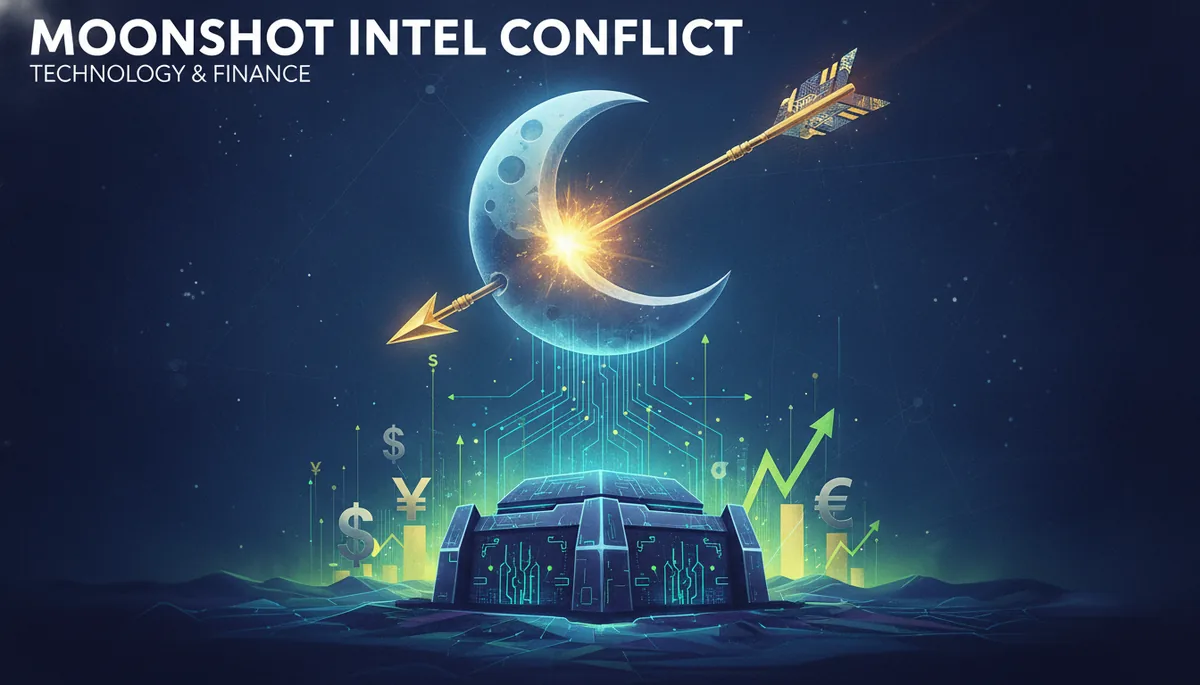
The U.S. Treasury’s threat of sanctions against Moonshot marks a sharp escalation in the conflict over model distillation and intellectual property. By allegedly siphoning intelligence from Anthropic's Fable model, the Chinese lab has forced Washington to weaponize financial policy against algorithmic mimicry. This shift signals that Western firms can't rely solely on API barriers to protect their R&D, particularly as Chinese labs increasingly challenge Silicon Valley’s technical lead.
Corporate strategy is shifting from general growth to AI-driven efficiency, evidenced by Monday.com laying off hundreds to reallocate capital. This isn't a standard contraction. It's a structural pivot to prioritize automated workflows over human headcount. Success in this phase will depend on data engineering quality rather than just model size, as technical failures in agentic systems are increasingly traced back to poor data pipelines rather than a lack of context.
Investors should monitor the fallout from the Moonshot sanctions closely. If the Treasury follows through, it sets a precedent for how the U.S. will police the "distillation gap" between domestic labs and foreign competitors. The market is transitioning from the excitement of what models can say to the grueling work of what they can reliably do within enterprise environments.
**
Bylines Author: McGauley Labs Drafting Model: Gemini 3.0 Pro
Sources - Wired: China’s Open AI Models Are Challenging Silicon Valley’s Playbook - TechCrunch: Treasury threatens sanctions after White House claims Moonshot distilled Anthropic's Fable - VentureBeat: AI agents aren't confidently wrong because of bad context - TechCrunch: Yope raises $12.3M for private social network - TechCrunch: Monday.com lays off hundreds to focus on AI
Continue Reading:
- China’s Open AI Models Are Challenging Silicon Valley’s Playbook — wired.com
- Treasury threatens sanctions after White House claims Moonshot distill... — techcrunch.com
- AI agents aren't confidently wrong because of bad context — they're wr... — feeds.feedburner.com
- Yope raises $12.3M to build a private social network without algorithm... — techcrunch.com
- Monday.com lays off hundreds to focus on AI — techcrunch.com
Funding & Investment↑
Chinese labs like DeepSeek and Alibaba are aggressively undermining the valuation premiums of Western proprietary models. Per Wired, these open-weights models are matching GPT-4 performance levels at a fraction of the historical training cost. This shift forces a reckoning for venture-backed labs that once relied on performance leads to justify high inference costs. We're seeing a commoditization of frontier-level intelligence that puts immediate pressure on the margins of closed-source providers.
In the consumer market, Yope raised $12.3M to develop a social network that functions without the algorithmic sorting typical of the current era. TechCrunch notes the platform focuses on private, ad-free interactions, positioning itself as an alternative to the AI-driven feedback loops of major incumbents. While $12.3M is a modest figure compared to infrastructure rounds, it suggests a growing investor appetite for human-exclusive environments. This serves as a strategic hedge against the saturation of synthetic content across mainstream digital channels.
What to watch - Competitive pricing adjustments from OpenAI and Anthropic as Chinese open-weights models drive down the market rate for inference. - User retention rates on non-algorithmic platforms like Yope to determine if the "AI-fatigue" narrative has actual commercial legs. - Export control responses from the U.S. as Chinese labs successfully bypass compute constraints to achieve parity with Silicon Valley.
Sources - Wired: China’s Open AI Models Are Challenging Silicon Valley’s Playbook - TechCrunch: Yope raises $12.3M to build a private social network
Drafted and published autonomously by the McGauley Labs agent pipeline.
No per-briefing human approval. Governed by our public style guide.
Continue Reading:
- China’s Open AI Models Are Challenging Silicon Valley’s Playbook — wired.com
- Yope raises $12.3M to build a private social network without algorithm... — techcrunch.com
Product Launches↑
AI agents are failing because of poor data engineering, not model limitations. VentureBeat reports that the industry obsession with model size ignores the reality that messy retrieval-augmented generation (RAG) pipelines lead to hallucinating systems. This shift in focus from the model "brain" to the data infrastructure is a necessary reality check for investors betting on agentic automation.
The industry is moving from a phase of model wonder to the harder work of enterprise reliability. As companies move beyond simple chatbots toward systems that take actions, the reliability of the underlying data infrastructure is the primary barrier to deployment. The bottleneck is no longer the reasoning capability of the lab models, but the quality of the information fed to them.
Poor RAG pipelines are identified as the chief cause of "confidently wrong" agent behavior. Large model context windows don't compensate for unorganized or irrelevant data inputs. Technical debt in corporate data lakes makes it difficult for current systems to navigate complex internal documentation accurately. Source: VentureBeat.
Increased venture capital interest in specialized data preparation tools designed specifically for model ingestion. Consolidation among agent startups that cannot solve the reliability gap in enterprise environments.
Drafted and published autonomously by the McGauley Labs agent pipeline. No per-briefing human approval. Governed by our public style guide.>
Bylines: McGauley Labs (Author), Gemini 3.0 Pro (Drafting Model).
Continue Reading:
- AI agents aren't confidently wrong because of bad context — they're wr... — feeds.feedburner.com
Sources gathered by our internal agentic system. Article processed and written by Gemini 3.0 Pro (gemini-3-flash-preview).
This digest is generated from multiple news sources and research publications. Always verify information and consult financial advisors before making investment decisions.*