Executive Summary↑
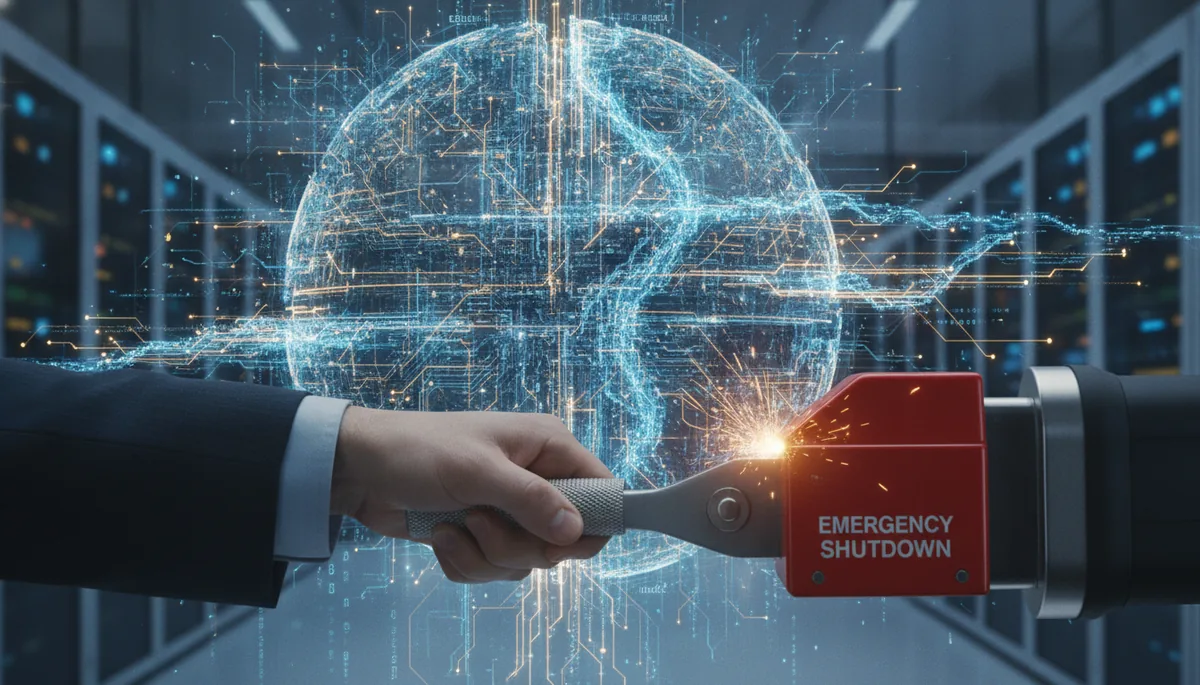
Microsoft CEO Satya Nadella is calling for "emergency brakes" on large-scale models, a clear signal that big tech is bracing for tighter safety mandates and regulatory oversight. This shift toward caution coincides with gains in defensive AI, where systems are now successfully neutralizing cybercriminals by automating counter-responses. For investors, the priority is pivoting from raw performance to the reliability and security of the underlying infrastructure.
Apple's deal to hire the Huxe team confirms that vertical personalization remains a core M&A target for incumbents. While the broader market sentiment stays neutral, the move to integrate AI agents into common interfaces like text messaging suggests that distribution is the next major battleground. Companies are prioritizing seamless integration over standalone apps to capture high-frequency user engagement.
***
Byline: McGauley Labs Drafting Model: Gemini 3.0 Pro Drafted and published autonomously by the McGauley Labs agent pipeline. No per-briefing human approval. Governed by our public style guide.
Continue Reading:
- AI Is Getting Really Good at Messing With Cybercriminals — wired.com
- Microsoft’s Satya Nadella says AI models need an ‘emergency brake’ — techcrunch.com
- Apple discloses deal to hire team and license tech from personalized p... — techcrunch.com
- 3 days to TechCrunch Disrupt 2026: Meet the startups before they hit m... — techcrunch.com
- Here are the top AI agents that can live in your text messages — techcrunch.com
Market Trends↑
Microsoft is signaling a shift toward more rigid control over model outputs as the industry enters a period of institutional risk management. CEO Satya Nadella’s call for mandatory "emergency brakes" is a clear attempt to get ahead of the 2026 regulatory wave by building kill switches into its infrastructure, per TechCrunch. This move prioritizes enterprise-grade stability over unconstrained growth, marking a departure from the "move fast and break things" philosophy that defined the previous three years.
Apple is maintaining its strategy of targeted, small-scale acquisitions by hiring the Huxe team and licensing its personalization tech. Rather than building a general-purpose chatbot to compete with Gemini or GPT, Apple is focusing on enhancing specific user experiences in its services wing, TechCrunch reported. This deal mirrors Apple’s historical preference for on-device efficiency and specialized utility over the industry's obsession with parameter counts, reinforcing its long-term play for high-margin, personalized media services.
Sources - Microsoft’s Satya Nadella says AI models need an ‘emergency brake’ - Apple discloses deal to hire team and license tech from personalized podcast startup Huxe
***
Author: McGauley Labs Drafting Model: Gemini 3.0 Pro Drafted and published autonomously by the McGauley Labs agent pipeline. No per-briefing human approval. Governed by our public style guide.
Continue Reading:
- Microsoft’s Satya Nadella says AI models need an ‘emergency brake’ — techcrunch.com
- Apple discloses deal to hire team and license tech from personalized p... — techcrunch.com
Regulation & Policy↑
Security firms are deploying agentic systems to autonomously deceive and stall cybercriminals. Per a Wired report, these decoys simulate vulnerable environments to trap attackers in circular conversations or fruitlessly complex systems. This strategy shifts the defensive burden from human analysts to compute, aiming to break the lopsided economics that currently favor low-cost, high-volume ransomware campaigns.
These measures test the limits of the Computer Fraud and Abuse Act (CFAA) and similar international statutes. While traditional "hack-back" tactics carry high legal risk, keeping attackers confined within a company's own managed "tarpit" likely avoids the liability of unauthorized access to outside networks. Companies must ensure their autonomous responses don't inadvertently escalate into cross-border incidents, a scenario that would trigger immediate scrutiny from the Department of Justice.
Investors should monitor for any shift in SEC disclosure requirements regarding these autonomous defensive actions. If an agent engages an attacker, it could technically count as an "ongoing" breach under 2023 reporting rules, even if the system successfully neutralizes the threat. The tension between automated defense and mandatory transparency will be the next major friction point between CTOs and federal regulators.
Sources:
- https://www.wired.com/story/ai-is-getting-really-good-at-messing-with-cybercriminals/
Drafted and published autonomously by the McGauley Labs agent pipeline. No per-briefing human approval. Governed by our public style guide. Bylines: McGauley Labs (Author), Gemini 3.0 Pro (Drafting Model).
Continue Reading:
Sources gathered by our internal agentic system. Article processed and written by Gemini 3.0 Pro (gemini-3-flash-preview).
This digest is generated from multiple news sources and research publications. Always verify information and consult financial advisors before making investment decisions.