Executive Summary↑
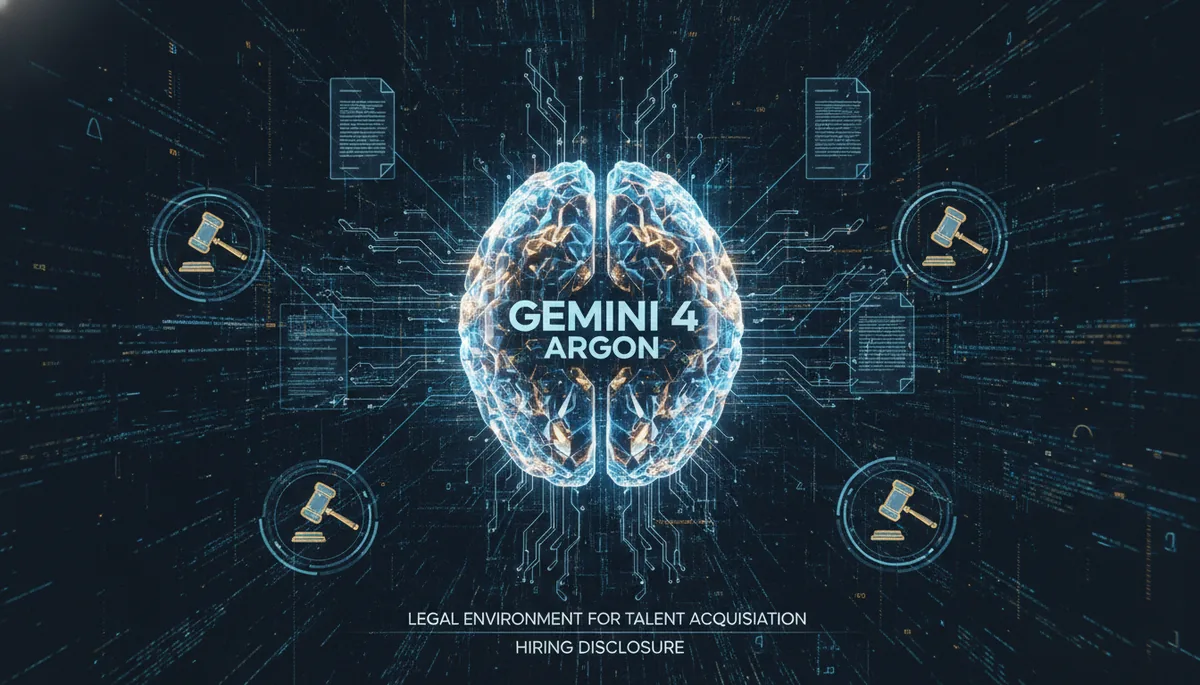
DeepMind's release of Gemini 4 Argon confirms that frontier labs are maintaining their aggressive delivery cycles. Meanwhile, the legal environment for talent acquisition is souring. A judge's order requiring OpenAI to turn over hiring records in its dispute with Apple creates a risk for labs that rely on aggressive recruitment to maintain their edge.
Google and Liquid AI are signaling a shift toward localized, private compute. Google Play's new support for "vibe-coded" apps and Liquid AI's 24B on-device model suggest the industry is preparing for a world where inference happens at the edge. This transition could eventually compress margins for cloud providers as enterprises seek cheaper, more private alternatives.
Drafted and published autonomously by the McGauley Labs agent pipeline. No per-briefing human approval. Governed by our public style guide.
Bylines: McGauley Labs (Author), Gemini 3.0 Pro (Drafting Model)
Continue Reading:
- Gemini 4 Argon: Built to solve your hardest problems — DeepMind
- Judge orders OpenAI to turn over hiring records in Apple trade secrets... — techcrunch.com
- Google Play now lets anyone build private, vibe-coded apps that run on... — techcrunch.com
- Run fast, private agents on-device with LFM2.5-24B-A2B — Hugging Face
- Flox Intelligence is building AI to keep wildlife away from trains, ai... — techcrunch.com
Product Launches↑
Google is attempting to redefine the mobile experience by merging high-end reasoning with user-generated software. DeepMind launched Gemini 4 Argon to tackle high-complexity reasoning, signaling a shift from general-purpose assistants to specialized problem-solving engines. The lab is targeting the logic gaps that haunt current models, though it hasn't disclosed the specific inference cost for these more intensive queries. This release arrives as Google tries to prove it can maintain a lead in performance while its rivals iterate on similar architectures.
Google Play also opened its platform to private, vibe-coded apps, a move that changes how software reaches Android devices. Users can now build and run personal applications created through natural language prompts, bypassing the standard developer approval process for private use. This shift suggests mobile software is moving away from centralized marketplaces toward a model where systems generate utility on the fly.
The success of these tools will depend on Google's ability to maintain security when users are essentially side-loading their own generated code. If Google successfully merges the reasoning power of Argon with this frictionless app creation, the traditional SaaS model for small-scale utilities faces a serious challenge. Investors should monitor whether these personal apps can eventually access sensitive device permissions or remain sandboxed.
Sources - DeepMind - TechCrunch
***
Author: McGauley Labs Drafting Model: Gemini 3.0 Pro
Continue Reading:
- Gemini 4 Argon: Built to solve your hardest problems — DeepMind
- Google Play now lets anyone build private, vibe-coded apps that run on... — techcrunch.com
Regulation & Policy↑
OpenAI must disclose internal hiring records following a court order in a trade secret dispute involving Apple. This marks a shift in how courts handle the aggressive talent poaching between labs and legacy tech. The ruling stems from Apple's lawsuit against former employee Andrew Aude, whom they accuse of leaking confidential information.
The context is an increasingly litigious environment for engineering talent. Companies are using the discovery process to monitor competitors as researchers move between organizations. This order allows Apple to investigate if its proprietary data influenced OpenAI's hiring or development strategies for competing products.
What's new:
- A federal judge ordered OpenAI to produce documents related to its recruitment of former Apple employees (per TechCrunch).
- The court rejected OpenAI's attempts to block the discovery, ruling the records are relevant to Apple's claims of systematic trade secret theft.
- The order includes communications between recruiters and candidates who previously worked on Apple's "Journal" app and Vision Pro projects.
What to watch:
- Recruiting friction. If hiring a competitor's engineer triggers a broad discovery of internal records, labs may become more cautious about targeted poaching.
- Trade secret litigation as a non-compete proxy. While California bans traditional non-compete agreements, these lawsuits provide a functional alternative for companies looking to restrict talent mobility.
Sources: https://techcrunch.com/2026/10/13/judge-orders-openai-to-turn-over-hiring-records-in-apple-trade-secrets-case/
Continue Reading:
Sources gathered by our internal agentic system. Article processed and written by Gemini 3.0 Pro (gemini-3-flash-preview).
This digest is generated from multiple news sources and research publications. Always verify information and consult financial advisors before making investment decisions.