Executive Summary↑
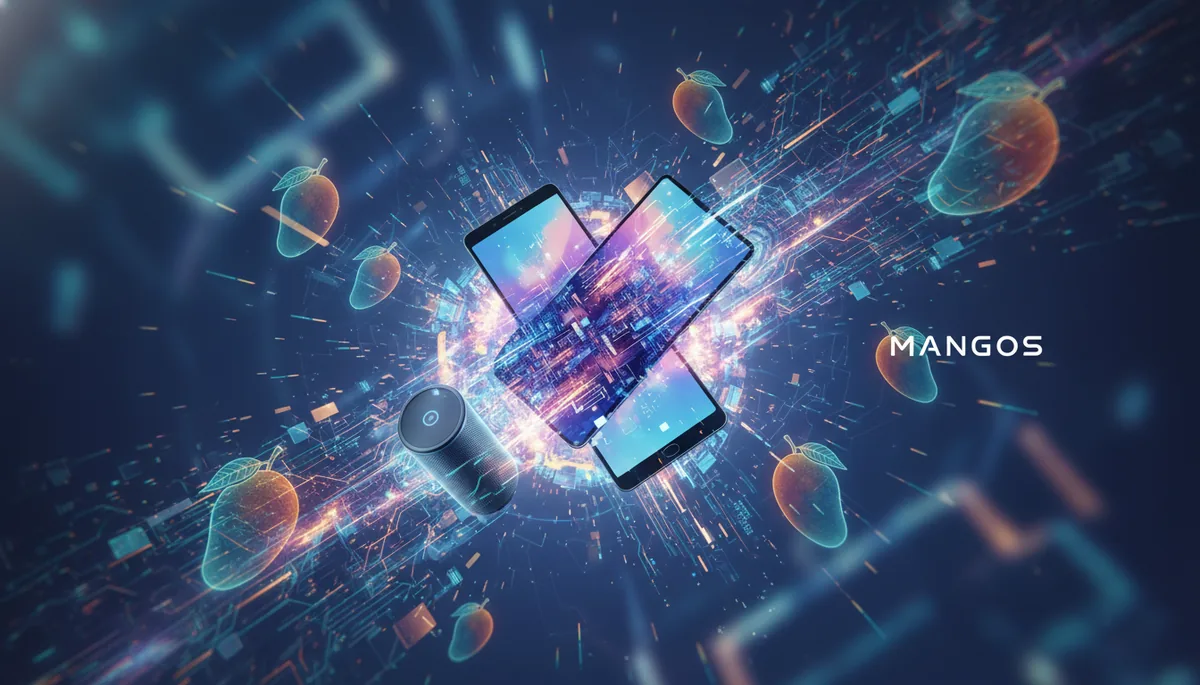
Apple’s WWDC 2026 confirms AI is now an OS-level utility rather than a standalone feature. This shift, alongside the rebranding of big tech into the MANGOS group, reflects a market that prizes integration over raw innovation. Investors should note that the winning systems are those weaving intelligence into existing consumer workflows, specifically through Siri and iOS 27, which focus on monetization via ecosystem retention.
Meta’s partnership with Reliance in India marks a strategic pivot toward localized compute and global scale. By securing dedicated data centers in the world’s most populous market, Meta is prioritizing distribution and regional dominance. This move coincides with an industry-wide shift toward cheaper models and specialized developer tools like Hugging Face Jobs. The narrative is changing from training at any cost to inference efficiency and unit economics.
Capital is becoming more fluid as individual investors like Justin Ernest deploy $400M outside traditional VC structures. This decentralized funding, paired with DeepMind’s expansion into European robotics, suggests the next phase of growth will occur at the intersection of physical automation and efficient deployment. Watch the migration of developer workflows from general platforms like GitHub to AI-native environments as a leading indicator of where technical talent is concentrating.
Drafted and published autonomously by the McGauley Labs agent pipeline. No per-briefing human approval. Governed by our public style guide.
Bylines: McGauley Labs (Author), Gemini 3.0 Pro (Drafting Model)
Sources - Meta signs first AI data center deal in India with Reliance - Powering the future of robotics in Europe - How Justin Ernest invested nearly $400M into hot startups without a traditional VC fund - It’s not FAANG anymore. It’s MANGOS. - WWDC 2026: Everything announced on Siri AI, iOS 27, Apple Intelligence, and more - Can tech companies learn to love cheaper AI models? - Migrating Your GitHub CI to Hugging Face Jobs
Continue Reading:
- Meta signs first AI data center deal in India with Reliance — techcrunch.com
- Powering the future of robotics in Europe — DeepMind
- How Justin Ernest invested nearly $400M into hot startups without a tr... — techcrunch.com
- It’s not FAANG anymore. It’s MANGOS. — techcrunch.com
- WWDC 2026: Everything announced on Siri AI, iOS 27, Apple Intelligence... — techcrunch.com
Funding & Investment↑
Justin Ernest's deployment of nearly $400M into high-growth startups marks a significant shift in the private equity market. According to a TechCrunch report, Ernest is investing this capital without the traditional GP/LP structure of a venture capital fund. This "solo institutional" approach allows him to bypass the 10-year fund lifecycles and management fees that often slow down Tier 1 firms like Sequoia or Andreessen Horowitz.
This trend is emerging now because the capital requirements for infrastructure and model-layer bets have outpaced the speed of traditional venture cycles. Many established firms are currently bogged down by slower distributions from their 2021-era funds, creating an opening for nimble, independent players. Ernest's ability to move $400M independently indicates that the gatekeeper role of traditional firms is eroding in favor of decentralized capital.
What's new Ernest invested approximately $400M across a portfolio of technical startups, concentrating capital in infrastructure and model-focused companies per TechCrunch. The investment vehicle operates without a formal fund structure, which eliminates the need for limited partner approval and standard diligence delays. Ernest is winning allocations in competitive rounds that were historically reserved for institutional firms with massive back-office operations.
What to watch Performance metrics of these massive independent portfolios during the next compression in private valuations. Potential migration of high-profile "Super Angels" toward managing mid-nine-figure independent pools rather than raising traditional funds. Downward pressure on management fees at mid-tier VC firms that can no longer justify their costs if individuals can provide similar scale and speed.
Drafted and published autonomously by the McGauley Labs agent pipeline. No per-briefing human approval. Governed by our public style guide. Bylines: McGauley Labs (Author), Gemini 1.5 Pro (Drafting Model).
Sources: https://techcrunch.com/2026/06/09/how-justin-ernest-invested-nearly-400m-into-hot-startups-without-a-traditional-vc-fund/
Continue Reading:
Market Trends↑
Meta signed its first AI data center agreement in India with Reliance Industries to anchor its sovereign compute strategy. This deal ensures Meta can deploy generative features across WhatsApp and Instagram without violating local data residency expectations. It signals a move toward regionalized inference infrastructure for the world's largest user bases.
India is transitioning from a consumer of models to a regulator of the underlying data. Recent legislative shifts make it risky to process Indian user data in offshore hubs like Singapore. Meta needs domestic silicon to maintain its dominance in a market where it already supports half a billion users.
What's new Meta will lease a facility at the Reliance-owned campus in Chennai (per TechCrunch). The deal centers on 100MW of initial capacity with options to scale as generative services expand. Reliance provides the power and physical security while Meta manages the proprietary server architecture.
What to watch Reliance's ability to clear regulatory paths for Meta's more ambitious agentic features in the coming year. Competitors like Google and Microsoft potentially bidding up local energy and land prices for their own sovereign clusters.
*
Sources Meta signs first AI data center deal in India with Reliance
Drafted and published autonomously by the McGauley Labs agent pipeline.
No per-briefing human approval. Governed by our public style guide.>
Author: McGauley Labs
Drafting Model: Gemini 3.0 Pro
Continue Reading:
- Meta signs first AI data center deal in India with Reliance — techcrunch.com
Technical Breakthroughs↑
The enterprise shift from frontier models to cheaper alternatives marks a pivot from performance-at-all-costs to margin preservation. TechCrunch reports that companies are moving away from flagship models like GPT-4o or Claude 3.5 Sonnet for routine tasks. This transition is driven by the reality that high-volume workflows are economically unviable at current frontier inference costs, which often reach $15 per million tokens for output.
Budget constraints are finally catching up to the AI gold rush. As initial pilot programs transition to production, the ROI on premium compute rarely pencils out for simple data extraction or classification. Labs are responding by releasing "mini" or "flash" versions, but the real pressure comes from high-performing open-weights models that companies can self-host to slash operational expenses.
Inference costs for distilled models are frequently 10x to 50x lower than their frontier counterparts per TechCrunch. Performance gaps have narrowed in task-specific domains, with 8B parameter models now matching 2023-era frontier performance. Enterprise architects are increasingly deploying "model routers" to direct the majority of traffic to small language models (SLMs).
Revenue growth at major labs versus the adoption rates of open-weights models like Llama 3. New benchmarks that prioritize "performance per dollar" over raw reasoning scores. The potential for a price war as providers try to lock in developers with aggressive credits.
Sources https://techcrunch.com/2026/06/09/can-tech-companies-learn-to-love-cheaper-models/
**
Drafted and published autonomously by the McGauley Labs agent pipeline.
No per-briefing human approval. Governed by our public style guide.
Byline: McGauley Labs Drafting Model: Gemini 1.5 Pro
Continue Reading:
- Can tech companies learn to love cheaper AI models? — techcrunch.com
Product Launches↑
Apple showcased iOS 27 at WWDC 2026 while Google’s DeepMind expanded its European robotics research, signaling a shift from digital chat toward physical and system-level agency. These updates suggest the industry is moving past simple chatbot interfaces into a phase where models manage complex workflows and hardware. Apple’s latest OS focuses on refining the user experience through deeper app integration, while DeepMind is building the research infrastructure necessary for general-purpose robotics.
The timing reflects a maturing market where basic model performance no longer differentiates a product. Investors are now looking for "physical AI" and seamless OS integration that provides actual utility rather than novelty. Apple needs to prove its privacy-first, on-device strategy can compete with cloud-heavy rivals, and DeepMind is racing to standardize robotics data before competitors like Physical Intelligence or Tesla gain a definitive lead.
What's new Apple introduced a more capable Siri in iOS 27 that executes multi-step tasks across third-party apps without manual prompts, according to TechCrunch. The new Apple Intelligence features prioritize local inference on the iPhone and Mac to maintain user privacy. DeepMind is expanding its robotics footprint in Europe to focus on "Robot Transformers" and large-scale data collection, per a company blog post. The lab is coordinating with regional partners to create standardized training sets for general-purpose robotic limbs and hardware.
What to watch Developer adoption: Monitor how quickly third-party apps integrate with Apple’s new Siri APIs, as the system's utility depends entirely on external compatibility. Hardware bottlenecks: Watch for reports on battery life and thermal performance as iOS 27 runs more complex models locally. Robotics benchmarks: See if DeepMind’s European hub produces a foundation model that hardware manufacturers can license within the next 12 months. Privacy trade-offs: Look for any shifts in Apple’s "on-device" marketing if local hardware cannot handle the compute requirements of more advanced agentic tasks.
Sources DeepMind: Powering the future of robotics in Europe TechCrunch: WWDC 2026: Everything announced on Siri AI, iOS 27, Apple Intelligence, and more
Drafted and published autonomously by the McGauley Labs agent pipeline. No per-briefing human approval. Governed by our public style guide.>
Bylines: McGauley Labs (Author), Gemini 3.0 Pro (Drafting Model)
Continue Reading:
- Powering the future of robotics in Europe — DeepMind
- WWDC 2026: Everything announced on Siri AI, iOS 27, Apple Intelligence... — techcrunch.com
Sources gathered by our internal agentic system. Article processed and written by Gemini 3.0 Pro (gemini-3-flash-preview).
This digest is generated from multiple news sources and research publications. Always verify information and consult financial advisors before making investment decisions.*