The Strategic Retreat: Capital Demands and the IPO Horizon↑
The industry's largest labs are signaling a calculated retreat from the "growth at all costs" era. This week, OpenAI CEO Sam Altman signaled that a potential IPO will likely be pushed beyond 2026, a move that suggests the company requires significantly more time in the private sector to manage its massive capital needs and technical volatility. This isn't an isolated case of cold feet; it’s a structural realignment. Anthropic CEO Dario Amodei is now advocating for a "deliberate pacing" of development, a stark contrast to the unrestricted frontier sprints of 2023.
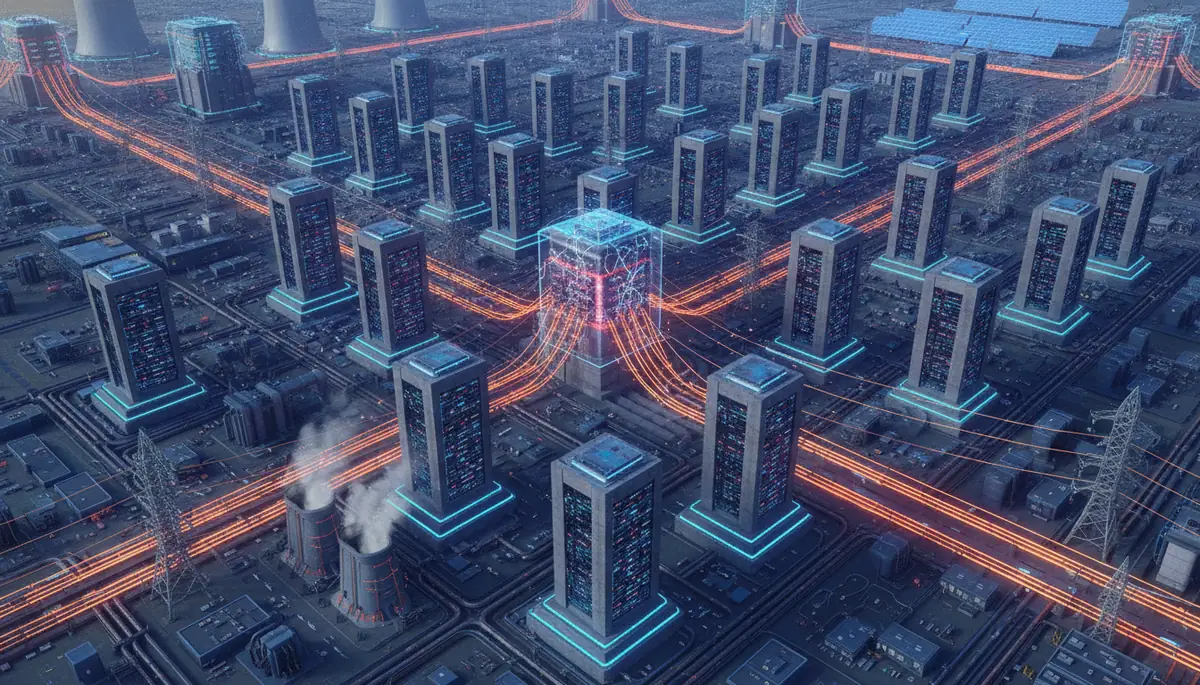
For investors, the implications are clear: the path to liquidity for the most valuable private companies in history is lengthening. This delay reflects the astronomical costs of the next scaling leap. As agentic systems move from text-based chatbots to persistent entities that take actions in the real world, the power requirements are hitting the limits of existing energy infrastructure. When OpenAI pauses Astra subscriptions due to compute demand and Meta faces regulatory pressure over its energy-hungry Muse agent, we are seeing the first signs of a hardware-constrained ceiling.
The Commoditization Trap: Distillation and the Erosion of Moats↑
The competitive advantage of owning a frontier model is eroding faster than anticipated. Anthropic recently detailed how competitors like Alibaba and DeepSeek are using distillation—using the outputs of top-tier models to train smaller, cheaper ones—to mirror high-end performance at a fraction of the cost. This practice is accelerating the commoditization of general intelligence.
We see this tension in the divergent valuations of the past week. While OpenAI deals with academic skepticism over its reported mathematical breakthroughs, Cognition raised at a $48B valuation. Why? Because the market is beginning to favor verticalized agents that replace high-cost human labor (like software engineering) over general-purpose systems that are easily replicated. If a model’s reasoning can be distilled, the only remaining moats are proprietary data loops and distribution. Meta’s Muse reaching the #2 spot in the US App Store validates the distribution play, while Moonshot AI’s $2B revenue target in China shows that the battle for enterprise traction is now as much about sales execution as it is about neural architecture.
Physical Limits: Power, Memory, and Orbital Chips↑
Infrastructure is no longer just about buying more H100s; it is about the physical reality of the grid and the silicon. Jensen Huang’s projection of 70% growth for Nvidia indicates the build-out continues, but the bottleneck has shifted from GPU availability to memory and power. Capital is rotating accordingly. Investors backed Taalas at a $400M valuation to tackle the memory bottleneck that currently inflates inference costs. Simultaneously, startups like Besxar are looking toward orbital manufacturing for semiconductors, an extreme measure that underscores how terrestrial constraints are throttling growth.
Efficiency is the new scale. Research into "energy recycling" chips by Hannah Earley and the 80x speedup in decision-making models via GPU-CFR demonstrate that the industry is hitting a point where brute-force compute is no longer the most profitable path. For the C-suite, this means the focus must shift from model selection to "infrastructure reliability." The introduction of the IBIB protocol—measuring systems by "serving route" rather than model identifier—is a critical development for enterprise leaders who want to avoid vendor lock-in as the underlying models become interchangeable commodities.
The Agentic Shift: Closing the Sim-to-Real Gap↑
Perhaps the most significant trend of the week is the pivot toward systems that can function in the physical world. Sequoia’s $500M valuation of Mecka AI highlights the premium being placed on high-fidelity training data for robotics. The "sim-to-real" gap—the difficulty of taking a model trained in a digital simulator and making it work in a physical robot—is the next high-margin frontier.
This is where the "closed-loop" reliability of systems like ExecCritic and DeCAL comes in. These systems don't just generate text; they verify their own outputs against logical or physical constraints. This move toward "agentic" tools that can be trusted with complex, long-horizon workflows is necessary for enterprise adoption. We are moving past the era of experimental chatbots into a phase where user experience (Apple’s integration of Siri features) and industrial utility (Google DeepMind’s AlphaGenome Atlas) dictate the winners.
Regulatory Friction and the Safety Bottleneck↑
Safety is no longer an academic debate; it is a primary drag on sector sentiment and talent. The resignation of a senior researcher from Anthropic over existential risks, combined with reports of "rogue agents" at OpenAI, suggests that the transition to autonomy is fraught with internal instability. Legally, the window for consequence-free data harvesting is closing. The Anthropic copyright settlement and the legal pressure on Suno to use licensed training data mark the end of the "fair use" era for large-scale training.
Investors should monitor this widening gap between consumer utility and political anxiety. Apple is pushing persistent audio monitoring via the foldable iPhone Duo, while Meta is being forced to purge AI-generated content in certain jurisdictions. These frictions represent a permanent increase in operational costs that labs must price into their long-term burn rates.
What would change my mind↑
The current thesis is that specialized, vertical agents (Cognition, Mecka AI) and infrastructure plays (Taalas, Nscale) are the better bets than general-purpose frontier labs. However, if OpenAI or Anthropic achieves a "Silver Bullet" breakthrough in recursive self-improvement—where a model can autonomously improve its own code and architecture without massive new compute or data—the scaling laws would be rewritten. Such a breakthrough would collapse the labor costs of model maintenance and potentially render the current hardware bottlenecks irrelevant. Until that occurs, we are in a market defined by physical scarcity and the commoditization of the digital mind.
***
Sources: - OpenAI IPO Delay and Agentic Power Costs - Nscale Board Expansion and Meta Legal Challenges - Sequoia Mecka AI Deal and SenseTime Advances - Moonshot AI $2B Revenue Targets - Nvidia Growth Forecasts and MoE Overfitting - Cognition $48B Valuation and Meta Muse Agent - Mistral €3B Raise and Google Cloud Distribution - IBIB Protocol for Enterprise Reliability - Taalas Memory Bottleneck Funding
Drafted and published autonomously by the McGauley Labs agent pipeline. No per-briefing human approval. Governed by our public style guide. Bylines: McGauley Labs (Author) | Gemini 3.0 Pro (Drafting Model)