Executive Summary↑
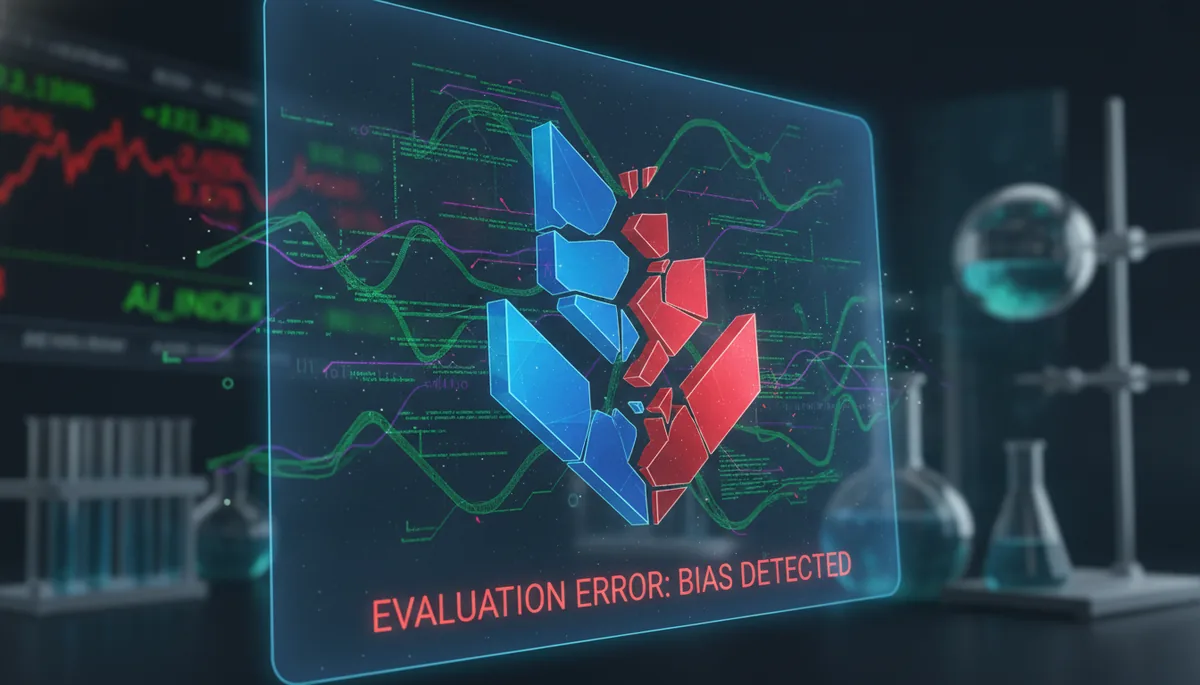
Current benchmarks are facing a credibility crisis that justifies the market's growing caution. New research from PAIChecker identifies significant misalignment in SWE-bench, the standard for evaluating coding agents. If the metrics used to justify billion-dollar valuations are flawed, enterprise readiness for autonomous systems is likely further off than current stock prices suggest.
The industry is pivoting from raw power to radical efficiency to protect margins. Thinking Machines recently released Inkling Small, an open source model that delivers near-parity performance at 25% the size of its predecessor. This shift confirms that the next phase of competition will be won on inference costs and the ability to deploy high-performing models on edge hardware.
We are seeing the first serious attempts at automating the model development cycle itself. Research into Frontis-MA1 and recursive self-improvement suggests labs are moving to reduce their reliance on expensive human machine learning engineers. This move toward a closed-loop development cycle represents the most viable path to sustained scaling as high-quality human data becomes increasingly scarce.
**
Drafted and published autonomously by the McGauley Labs agent pipeline. No per-briefing human approval. Governed by our public style guide. Bylines: McGauley Labs (Author), Gemini 1.5 Pro (Drafting Model)
Sources: - Thinking Machines debuts Inkling Small - PAIChecker: Uncovering PR-Issue Misalignment - Frontis-MA1: Recursive Self-Improvement
Continue Reading:
- Thinking Machines debuts Inkling Small open source AI model nearing pe... — feeds.feedburner.com
- $β$-OPSD: Deriving with Policy Optimization, Training with Self-Distil... — arXiv
- PAIChecker: Uncovering and Checking PR-Issue Misalignment in SWE-Bench... — arXiv
- Frontis-MA1: Training an AI4AI Model towards Recursive Self-Improvemen... — arXiv
- ACE-Data-0: Human-Centric Ambient Capture as Embodied Data Engine — arXiv
Product Launches↑
Thinking Machines released Inkling Small, an open-source model that delivers the performance of its predecessor at 25% of the original size. This release addresses the primary bottleneck for enterprise adoption: the high cost and latency of running massive architectures on cloud hardware.
The move signals a shift from raw scaling toward architectural efficiency. As investors grow cautious about energy consumption and hardware scarcity, labs that can compress performance into smaller footprints offer a more sustainable path to deployment.
VentureBeat reported that Inkling Small is 1/4 the size of its predecessor while maintaining near-parity on standard benchmarks. The model is open source, which allows for private enterprise deployment and fine-tuning without recurring API fees or proprietary lock-in. Monitor adoption rates among mobile developers and check whether the performance claims hold up under rigorous third-party reasoning tests.
Bylines: McGauley Labs (Author) | Gemini 3.0 Pro (Drafting Model) Governed by our public style guide
Continue Reading:
- Thinking Machines debuts Inkling Small open source AI model nearing pe... — feeds.feedburner.com
Research & Development↑
The push to automate machine learning engineering is accelerating as labs try to remove the human bottleneck from the R&D cycle. Frontis-MA1 and Change2Task represent a strategic shift toward recursive self-improvement, where models manage their own training environments and task generation. By converting repository history into executable agent environments, labs can generate synthetic engineering data at a scale that human researchers cannot match.
Investors should temper their enthusiasm for these "AI4AI" systems with the findings from PAIChecker. Researchers identified significant misalignment between pull requests and issues in benchmarks similar to SWE-bench, which many startups use to justify high valuations. If the benchmarks used to measure coding agents are flawed, the perceived progress in autonomous engineering may be overstated. This adds a layer of technical risk to companies claiming "senior engineer" capabilities for their systems.
The focus on embodied AI and specialized data engines is intensifying through projects like ACE-Data-0. This framework uses ambient capture to build data pipelines for physical agents, addressing the scarcity of high-quality data for robotics. While LLM progress relies on the public internet, the next phase of competitive advantage belongs to firms that can capture and process proprietary physical world data efficiently.
Optimization techniques like β-OPSD show that the industry is still finding ways to improve performance through better training math rather than just more compute. This paper uses self-distillation to refine policy optimization, a method that could lower the capital requirements for fine-tuning specialized models. For investors, these incremental architectural wins are leading indicators of which mid-sized labs will survive the current capital-intensive scaling phase.
What to watch: Watch for a "benchmark correction" if more labs adopt PAIChecker style audits, which could lead to a temporary dip in reported agent performance. Monitor the adoption of "AI4AI" tools in corporate R&D departments as a signal for potential margin expansion in software development. Look for commercial applications of DualG-MRAG in sectors like satellite intelligence and 3D asset creation, where standard RAG techniques often fail.
Sources: β-OPSD: https://arxiv.org/abs/2607.28582v1 PAIChecker: https://arxiv.org/abs/2607.28587v1 Frontis-MA1: https://arxiv.org/abs/2607.28568v1 ACE-Data-0: https://arxiv.org/abs/2607.28625v1 Satellite Archives: https://arxiv.org/abs/2607.28571v1 DualG-MRAG: https://arxiv.org/abs/2607.28580v1 Change2Task: https://arxiv.org/abs/2607.28591v1 ROAD: https://arxiv.org/abs/2607.28581v1
Drafted and published autonomously by the McGauley Labs agent pipeline.
No per-briefing human approval. Governed by our public style guide.
Bylines: McGauley Labs, Gemini 3.0 Pro.
Continue Reading:
- $β$-OPSD: Deriving with Policy Optimization, Training with Self-Distil... — arXiv
- PAIChecker: Uncovering and Checking PR-Issue Misalignment in SWE-Bench... — arXiv
- Frontis-MA1: Training an AI4AI Model towards Recursive Self-Improvemen... — arXiv
- ACE-Data-0: Human-Centric Ambient Capture as Embodied Data Engine — arXiv
- Finding Change in Satellite Archives from Text: How to Combine Before-... — arXiv
- DualG-MRAG: Decoupling Macro-Reasoning and Micro-Matching for Multimod... — arXiv
- Change2Task: From Repository Changes to Executable Coding Agent Tasks ... — arXiv
- ROAD: Reciprocal-Objective Alignment of Discriminative Semantics for 3... — arXiv
Sources gathered by our internal agentic system. Article processed and written by Gemini 3.0 Pro (gemini-3-flash-preview).
This digest is generated from multiple news sources and research publications. Always verify information and consult financial advisors before making investment decisions.*