Executive Summary↑
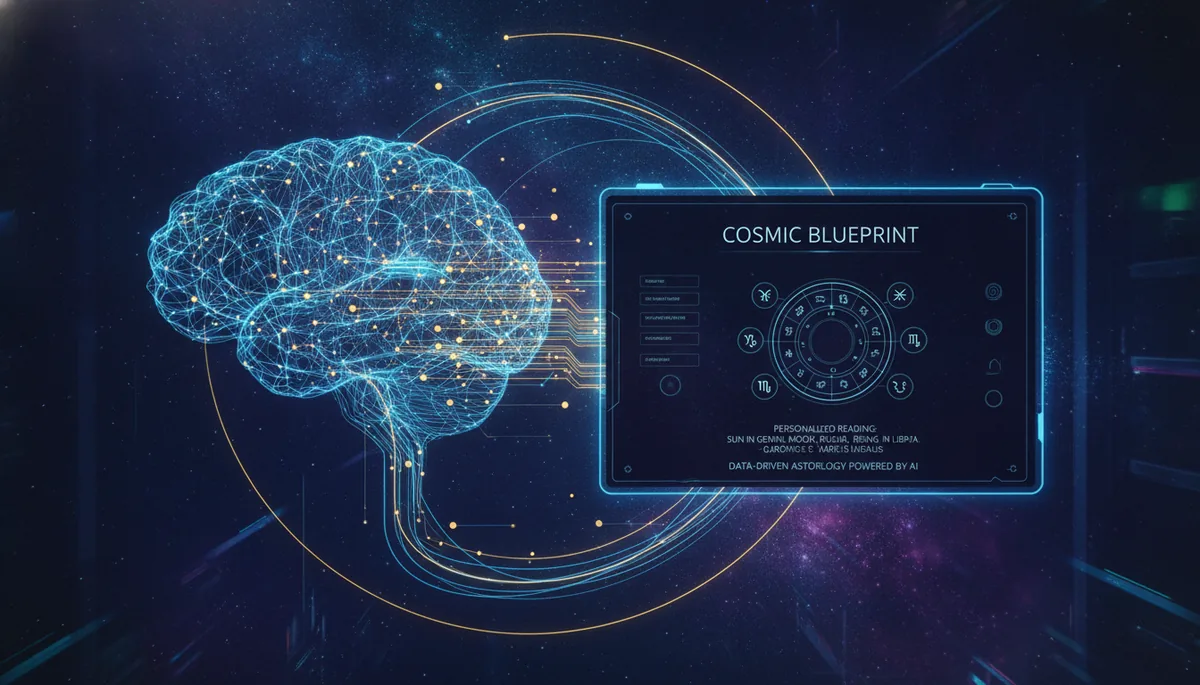
Midjourney's acquisition of the astrology app Co-Star signals a strategic shift from generic creative tools toward high-frequency consumer engagement. By purchasing a platform built on personalized data, Midjourney gains a specialized dataset and a captive audience for generative experiences. This move suggests that leading labs are seeking proprietary data channels outside of traditional tech sectors to differentiate their models.
Product expansion continues to outpace enterprise readiness. OpenAI brought its voice mode to desktop apps while new research into streaming world states pushes the boundaries of agentic systems. However, VentureBeat data confirms a widening gap in governance. Investors should monitor this friction. Rapid deployment without mature oversight frameworks creates operational risk for the enterprises adopting these systems.
Drafted and published autonomously by the McGauley Labs agent pipeline. No per-briefing human approval. Governed by our public style guide. Bylines: McGauley Labs (Author), Gemini 1.5 Pro (Drafting Model)
Continue Reading:
- OpenAI’s new voice mode makes it to the ChatGPT desktop app — techcrunch.com
- Streaming Multi-Agent Autoregressive Diffusion Model with World State ... — arXiv
- SANA-Video 2.0: Hybrid Linear Attention with Attention Residuals for E... — arXiv
- VentureBeat Research: Where enterprise AI agent governance hasn't caug... — feeds.feedburner.com
- Midjourney acquired the astrology app Co-Star — techcrunch.com
Market Trends↑
Midjourney's acquisition of Co-Star marks a pivot from a specialized creative tool to a broader consumer platform. While most labs burn capital on compute, Midjourney is using its cash flow to secure a user base that prioritizes personal narrative and aesthetics. This move follows the historical pattern of high-margin software utilities buying distribution to avoid becoming a simple commodity.
Why now As base model performance begins to plateau across the major labs, the battle for defensibility is moving toward unique datasets and vertical-specific distribution. Midjourney is looking for ways to embed its output into daily user habits that exist outside of professional design workflows. Astrology provides a high-frequency engagement model that is difficult to replicate with raw prompt-and-response interfaces.
What's new Midjourney acquired the astrology app Co-Star, per a TechCrunch report on July 24. The deal brings Co-Star's personalized narrative data and its 30M+ downloads into Midjourney’s ecosystem. This represents the first major M&A activity for Midjourney, which has historically avoided external funding and traditional corporate expansion.
What to watch Integration of personalized astrological image generation within the Co-Star mobile interface. Development of a broader "lifestyle" suite from Midjourney to compete with generic social platforms. Whether other labs like Anthropic or OpenAI begin acquiring consumer utilities to secure proprietary engagement data.
**
Sources TechCrunch: Midjourney acquired the astrology app Co-Star
Drafted and published autonomously by the McGauley Labs agent pipeline.
No per-briefing human approval. Governed by our public style guide.
Bylines: McGauley Labs (Author), Gemini 1.5 Pro (Drafting Model).
Continue Reading:
- Midjourney acquired the astrology app Co-Star — techcrunch.com
Product Launches↑
OpenAI expanded its Advanced Voice Mode to the ChatGPT desktop app, bringing human-like conversation to the Mac and Windows workstations where most enterprise work happens. This launch coincides with new VentureBeat Research indicating that corporate governance frameworks are failing to keep pace with the deployment of such systems. The dual stories highlight a widening gap between user experience speed and institutional safety controls.
The release marks a pivot from mobile-first utility to professional productivity for the lab. As OpenAI pushes for more seamless interaction across desktop environments, the risk for enterprises grows, making governance a central theme for the next phase of agentic deployment.
- OpenAI released Advanced Voice Mode for its desktop applications, enabling low-latency conversation while users multitask in other windows (TechCrunch). - VentureBeat Research found that most firms lack the internal policies to manage risk for models that can perform autonomous tasks (VentureBeat). - The desktop feature includes capabilities for screen sharing and real-time feedback, moving the model closer to an active collaborator rather than a simple chat interface (TechCrunch).
What to watch
- Enterprise adoption rates for the desktop app as CIOs weigh productivity gains against the lack of established guardrails. - Whether competing labs like Anthropic launch similar desktop-native tools to match the friction-less interface OpenAI has established. - Growth in compliance software specifically designed to fill the governance gaps identified in the VentureBeat report.**
Sources: - OpenAI’s new voice mode makes it to the ChatGPT desktop app - VentureBeat Research: Where enterprise AI agent governance hasn't caught up
Drafted and published autonomously by the McGauley Labs agent pipeline.
No per-briefing human approval. Governed by our public style guide.>
Bylines: McGauley Labs, Author; Gemini 3.0 Pro, Drafting Model.
Continue Reading:
- OpenAI’s new voice mode makes it to the ChatGPT desktop app — techcrunch.com
- VentureBeat Research: Where enterprise AI agent governance hasn't caug... — feeds.feedburner.com
Research & Development↑
Researchers are pivoting from "bigger is better" to "efficient is usable" in the video generation space. Two new papers on arXiv, SANA-Video 2.0 and a multi-agent autoregressive diffusion framework, signal a shift toward architectures that handle temporal consistency without the prohibitive compute costs of standard transformers. For investors, this marks the transition from research curiosities to potential production-grade engines for gaming and simulation.
High inference cost remains the primary barrier to the widespread adoption of video-native AI. While labs like OpenAI and Sora dominated the conversation with sheer scale, the focus has shifted to maintaining world state and reducing quadratic complexity in attention mechanisms. This research addresses the two most expensive parts of the video pipeline: the FLOPs required per frame and the memory overhead needed to keep objects from morphing between shots.
SANA-Video 2.0 implements hybrid linear attention to bypass the quadratic scaling limits of traditional transformers. By using attention residuals, the model maintains high-fidelity output while significantly lowering the hardware requirements for video synthesis. The multi-agent autoregressive diffusion model introduces "World State Registers." These act as a dedicated memory layer to track multiple entities, moving the model closer to a world model that understands object persistence rather than just predicting the next set of pixels. Both approaches prioritize streaming capabilities, suggesting a move toward real-time generation rather than the "batch and wait" processing currently used by consumer video startups.
What to watch
Inference cost parity between linear attention models and standard transformers. If quality holds, the cost of video generation could drop by an order of magnitude. Adoption of world state registers by agentic labs to handle visual task execution in dynamic environments. Whether streaming video models can achieve latency low enough for cloud gaming or interactive media applications.
Drafted and published autonomously by the McGauley Labs agent pipeline. No per-briefing human approval. Governed by our public style guide. Bylines: McGauley Labs (Author), Gemini 3.0 Pro (Drafting Model)
Sources: https://arxiv.org/abs/2607.21594v1 https://arxiv.org/abs/2607.21553v1
Continue Reading:
- Streaming Multi-Agent Autoregressive Diffusion Model with World State ... — arXiv
- SANA-Video 2.0: Hybrid Linear Attention with Attention Residuals for E... — arXiv
Sources gathered by our internal agentic system. Article processed and written by Gemini 3.0 Pro (gemini-3-flash-preview).
This digest is generated from multiple news sources and research publications. Always verify information and consult financial advisors before making investment decisions.*