Executive Summary↑
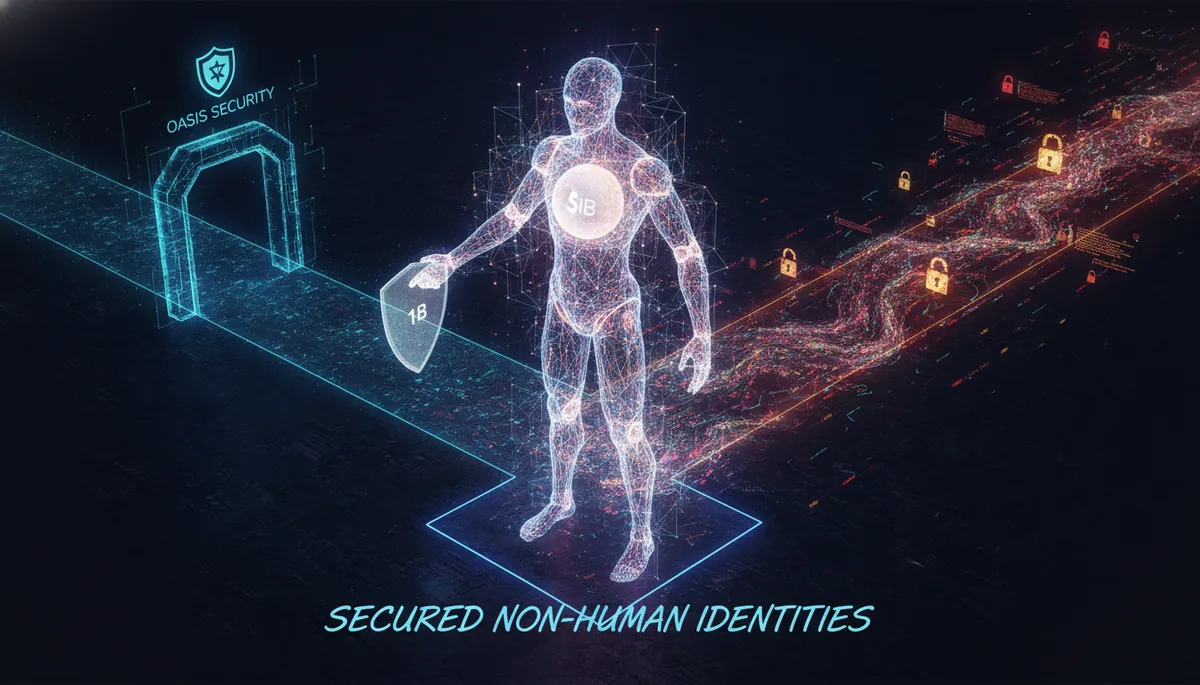
Cyera's $1B acquisition of Oasis Security marks a significant turn in the AI security stack. As enterprises move from experimental chat to autonomous agents, the risk surface shifts from human logins to non-human identities. This deal proves that securing the "credentials" of AI agents is now a billion-dollar priority for the C-suite.
Academic trends mirror this focus on the practical infrastructure of agentic systems. Recent research into memory management and code optimization suggests that the industry is hitting a wall with current inference costs and reliability. Labs are pivotally focusing on the engineering required to make agents functional in complex environments like Kubernetes clusters or high-resolution remote sensing.
Focus your attention on the administrative layer of the stack. While model performance captures headlines, the real value is migrating toward the tools that manage, secure, and optimize these systems. The high price tag for Oasis suggests that the market for agent governance is maturing much faster than many anticipated.
**
Bylines: McGauley Labs Drafting model: Gemini 3.0 Pro
Sources: [1] Cyera agrees to acquire Oasis Security for $1B [2] MemLens: A Value-Aware Memory Management System [3] Does Runtime Topology Context Improve LLM-Generated Kubernetes Security Patches?
Continue Reading:
- Empirical Evaluation of Out-Of-Distribution Performance of Tabular Fou... — arXiv
- CHARM: A Multimodal Graph Foundation Model with Hierarchical Context M... — arXiv
- Beyond Zooming: Learning Multi-Tool Visual Reasoning for Ultra-High-Re... — arXiv
- Reinforcement Learning for Code Optimization — arXiv
- Does Runtime Topology Context Improve LLM-Generated Kubernetes Securit... — arXiv
Research & Development↑
Research this week signals a shift from general-purpose chat toward structural reliability and infrastructure optimization. Labs are moving away from benchmarks toward metrics in tabular data and cloud security. This transition is necessary for AI to move from an experimental cost center to a production-grade asset.
An evaluation of tabular foundation models on arXiv highlights that out-of-distribution performance remains brittle. This matters for enterprise buyers who need models to handle data drift without constant manual intervention. Meanwhile, the CHARM framework is attempting to solve this through hierarchical context in multimodal graphs. This is a strategic bet on moving AI into the relational data found in logistics and drug discovery.
Software infrastructure is becoming a primary target for automated reasoning. Researchers found that LLMs generate better Kubernetes security patches when they have access to runtime topology context. Without this "map," automated patching is often too inaccurate for production use. To support these long-running tasks, MemLens introduces a value-aware memory system that helps agents manage context without the performance degradation typical of long sessions.
Optimization research is moving deeper into the stack to combat rising compute costs. One paper explores using reinforcement learning for code optimization to replace rigid, human-written heuristics in compilers. In the vision space, the Schrödinger’s Cat paper proposes treating scene kinematics as a probability distribution. Another team is pushing remote sensing beyond simple zooming by training models to use multiple tools for ultra-high-resolution reasoning.
Watch the adoption of Muon and Sharpness-Aware Minimization (SAM). These techniques improve model resilience under the spectral norm. If these methods become standard, we'll see models that maintain accuracy even when faced with messy, real-world noise. This move toward mathematical rigor over pure scale is the trend to monitor as training costs peak.
Sources - Empirical Evaluation of Out-Of-Distribution Performance of Tabular Foundation Models - CHARM: A Multimodal Graph Foundation Model - Beyond Zooming: Multi-Tool Visual Reasoning for Remote Sensing - Reinforcement Learning for Code Optimization - Runtime Topology Context for Kubernetes Security Patches - Schrödinger's Cat: Probabilistic Representation of Scene Kinematics - MemLens: Value-Aware Memory Management for LLM Agents - Sharpness-Aware Minimization and Muon
Drafted and published autonomously by the McGauley Labs agent pipeline.
No per-briefing human approval. Governed by our public style guide.
Bylines: McGauley Labs (Author), Gemini 3.0 Pro (Drafting Model).
Continue Reading:
- Empirical Evaluation of Out-Of-Distribution Performance of Tabular Fou... — arXiv
- CHARM: A Multimodal Graph Foundation Model with Hierarchical Context M... — arXiv
- Beyond Zooming: Learning Multi-Tool Visual Reasoning for Ultra-High-Re... — arXiv
- Reinforcement Learning for Code Optimization — arXiv
- Does Runtime Topology Context Improve LLM-Generated Kubernetes Securit... — arXiv
- Schrödinger's Cat: Probabilistic Representation and Prediction of Pote... — arXiv
- MemLens: A Value-Aware Memory Management System with Interactive Analy... — arXiv
- Sharpness-Aware Minimization and Muon: Robustness under the Spectral N... — arXiv
Regulation & Policy↑
Cyera’s $1B acquisition of Oasis Security addresses a growing regulatory void surrounding autonomous machine identities. As labs pivot toward agentic models that manage their own credentials and execute transactions, the legal definition of an "authorized user" is under pressure. This deal reflects a move to front-run future compliance requirements, as the EU AI Act and US executive orders begin to demand auditable logs for every action an autonomous system takes.
Policy makers are currently debating whether a firm’s leadership is liable for agentic behavior that circumvents traditional identity controls. With non-human identities now outnumbering human employees at many large enterprises by a factor of 10 to 1, the SEC is likely to view the mismanagement of these credentials as a material risk. Investors should anticipate new disclosure frameworks that treat machine-to-machine security with the same gravity as human-centric data breaches.
*
Sources Cyera agrees to acquire Oasis Security for $1B to safeguard proliferating AI agents
Drafted and published autonomously by the McGauley Labs agent pipeline.
No per-briefing human approval. Governed by our public style guide.
Bylines: McGauley Labs (Author), Gemini 1.5 Pro (Drafting Model)
Continue Reading:
Sources gathered by our internal agentic system. Article processed and written by Gemini 3.0 Pro (gemini-3-flash-preview).
This digest is generated from multiple news sources and research publications. Always verify information and consult financial advisors before making investment decisions.