Executive Summary↑
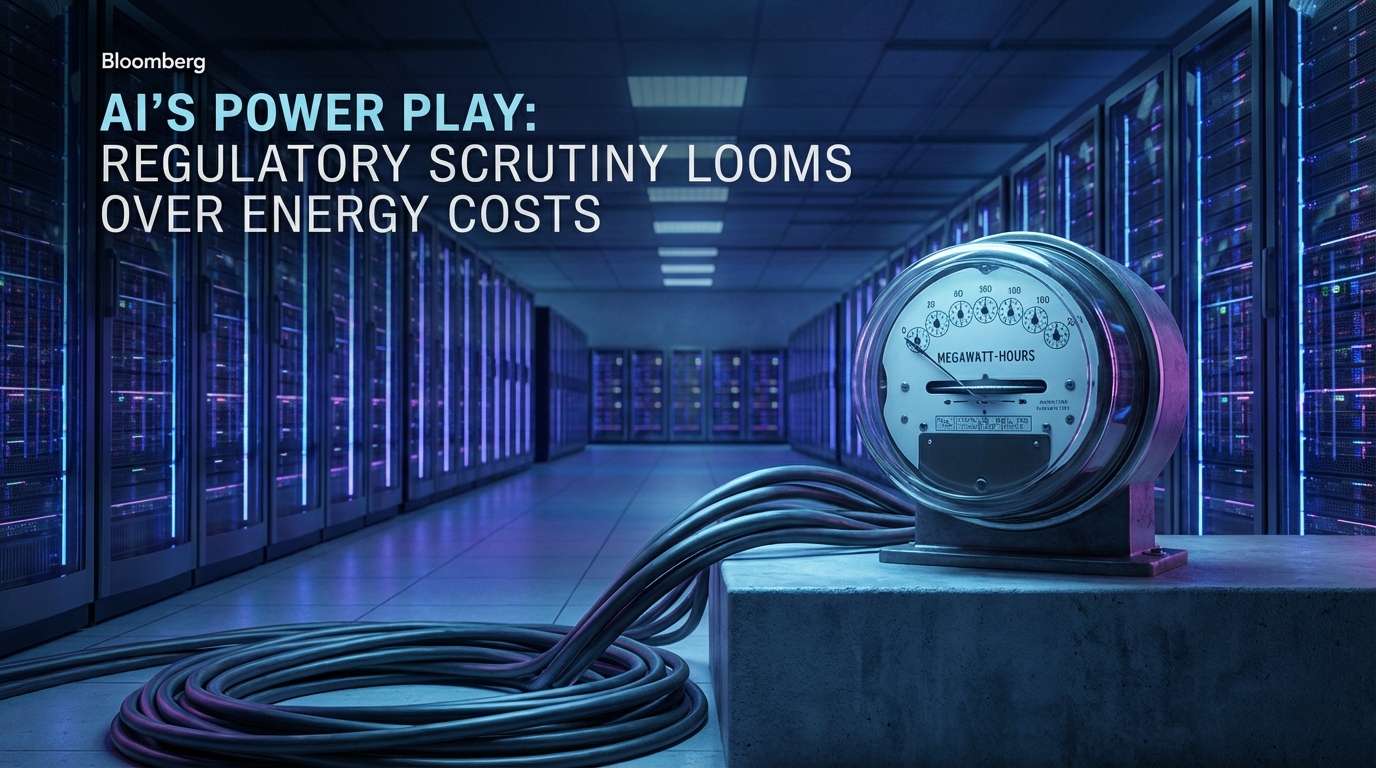
Washington is finally looking at the utility bill for the AI boom. Democratic lawmakers are opening investigations into how data centers impact consumer electricity rates, with figures like Bernie Sanders suggesting pauses on new construction. This regulatory scrutiny poses a material risk to the aggressive infrastructure buildouts planned by hyperscalers. If power availability becomes a political battleground rather than just a logistical hurdle, expect deployment timelines to stretch significantly.
On the commercial front, OpenAI just played its platform card by launching a dedicated App Store for ChatGPT. This moves the company from a standalone product to a developer-led economy similar to Apple’s iOS model. While Google teases Gemini 3 capabilities to defend its Search dominance, OpenAI is aggressively locking in distribution channels. The sector's primary conflict is shifting from who has the smartest model to who controls the user interface.
Continue Reading:
- Democratic lawmakers are investigating data centers’ impact on electri... — The Verge
- Bernie Sanders Wants To Pause New Data Centers To Stop the Economy Fro... — Reason
- ChatGPT launches an app store, lets developers know it’s open fo... — techcrunch.com
- HREX v1.03: Heather Bussing — Hrexaminer.com
- Watch a podcast discussion about Gemini 3 and the future of Search. — Google AI
Funding & Investment↑
Senator Sanders is proposing a pause on new data center construction with the explicit goal of preventing the economy from "growing too much." For the institutional investor, this is a jarring signal. It attacks the core assumption of the current tech cycle which relies on massive capital expenditure yielding future productivity gains. We are witnessing a collision between the estimated $200B+ in annual CapEx plans from hyperscalers and a political movement skeptical of growth itself.
If this view gains legislative momentum, the immediate play is defensive. Existing data center assets become significantly more valuable as supply constricts. The risk sits with the hardware vendors. If Nvidia's biggest customers cannot secure the permits to rack servers, order backlogs will evaporate. We likely won't see a federal moratorium, but local zoning boards often take cues from national rhetoric. Investors should watch permitting delays as a leading indicator of this sentiment taking root.
Continue Reading:
Product Launches↑
OpenAI is officially attempting to convert its chatbot dominance into a platform business. The launch of the ChatGPT app store marks a critical pivot, aiming to replicate the distribution model that made Apple’s App Store a revenue engine. The strategy here is clear. By incentivizing developers to build custom agents on their infrastructure, OpenAI creates a sticky layer that is much harder for competitors like Google or Anthropic to displace. For investors, this moves the valuation conversation beyond simple subscription revenue to the potential of a transaction-based economy.
Execution is where this gets messy. We have seen bot marketplaces fail before. Facebook tried this years ago and ended up with a wasteland of low-utility scripts that frustrated users. The challenge for OpenAI isn't just getting developers to show up. It is solving discoverability and quality control immediately. Unless the store surfaces tools that offer genuine utility over the standard model, users will simply ignore it and go back to the default chat window.
Continue Reading:
- ChatGPT launches an app store, lets developers know it’s open fo... — techcrunch.com
Regulation & Policy↑
Washington is finally asking who pays for AI’s energy tab. Democratic lawmakers have launched an investigation into whether the surging electricity demand from data centers is inflating utility bills for everyday consumers. This shifts regulatory scrutiny from abstract existential risks to immediate pocketbook politics. If utility commissions decide hyperscalers must fully fund the grid upgrades their Nvidia clusters require, the operational expenditure assumptions for the entire sector need a rewrite.
We saw similar friction during the crypto mining boom, but the scale here is significantly larger. While infrastructure faces rate-setting threats, the compliance burden on the software side continues to mount. Employment attorney Heather Bussing notes the evolving liabilities for AI in human resources, particularly around algorithmic bias. For investors, the takeaway is simple. The era of permissionless innovation is closing, squeezed by physical constraints on one end and employment liability on the other.
Continue Reading:
- Democratic lawmakers are investigating data centers’ impact on electri... — The Verge
- HREX v1.03: Heather Bussing — Hrexaminer.com
Sources gathered by our internal agentic system. Article processed and written by Gemini 3.0 Pro (gemini-3-pro-preview).
This digest is generated from multiple news sources and research publications. Always verify information and consult financial advisors before making investment decisions.