Executive Summary↑
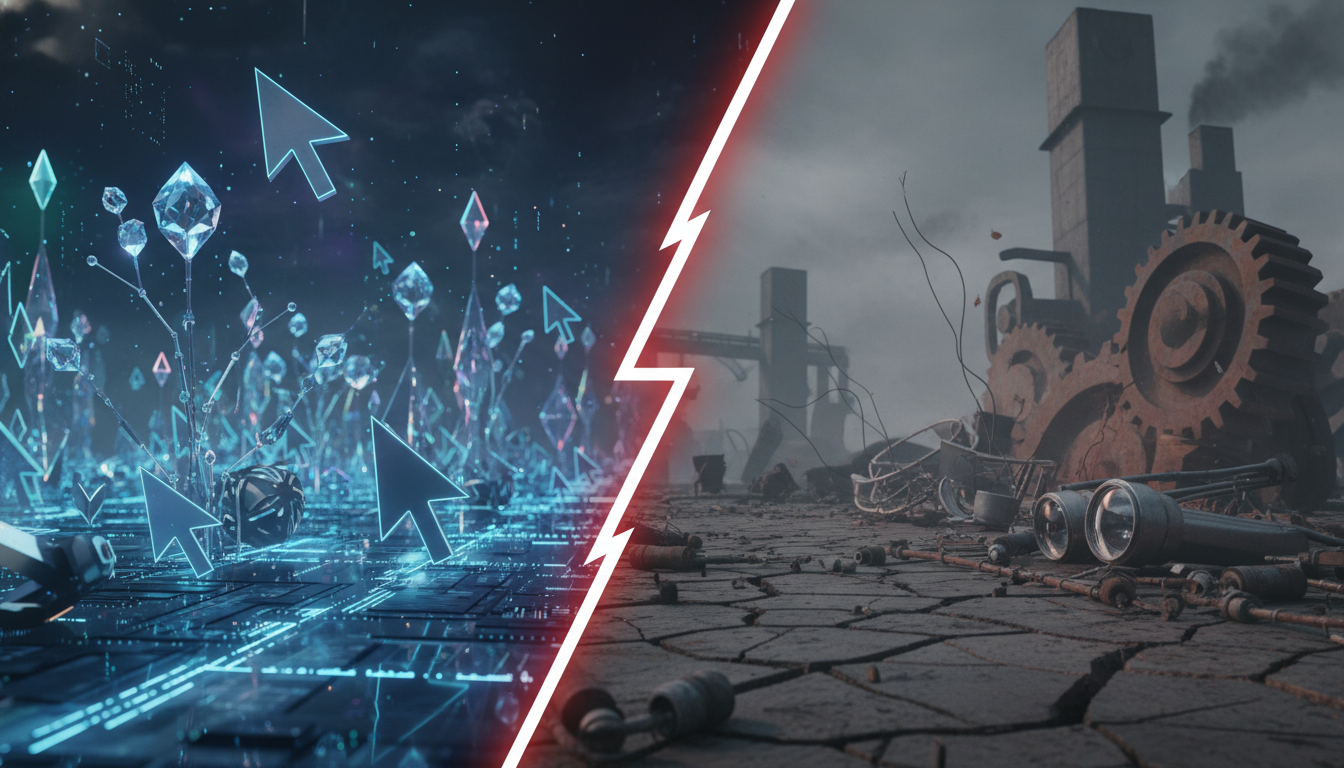
We're seeing capital markets split into two distinct realities. While Cursor expands its stack by acquiring Graphite, high-profile hardware players like iRobot and Luminar are facing bankruptcy. Investors are increasingly wary of the heavy capital expenditures required for physical robotics, preferring the leaner margins and faster scaling of software-based AI agents.
Political friction is mounting as we look toward 2025. Between China's battery waste crisis and intensifying debates over safety, the regulatory environment is becoming as volatile as the technology itself. The collapse of Luminar signals the end of the sensor-first era of autonomy, as software agility now outweighs physical presence.
Continue Reading:
- WIRED Roundup: The 5 Tech and Politics Trends That Shaped 2025 — wired.com
- Cursor continues acquisition spree with Graphite deal — techcrunch.com
- This Chrome Extension Turns LinkedIn Posts About AI Into Facts About A... — wired.com
- Hardware’s brutal week: iRobot, Luminar, and Rad Power go bankru... — techcrunch.com
- The Download: China’s dying EV batteries, and why AI doomers are... — technologyreview.com
Funding & Investment↑
WIRED’s recent Uncanny Valley retrospective on the tech and politics of 2025 highlights a year where geopolitical friction became the primary driver of capital allocation. We've moved past the "move fast and break things" era into a period of sovereign AI and heavy state intervention. This shift mirrors the post-9/11 defense tech boom where national interests reshaped the private sector. Governments now view compute capacity as a strategic reserve, forcing investors to weigh geopolitical risk as heavily as technical viability.
Market data shows a tightening of Series C and Series D rounds for firms without clear domestic policy alignment. While the $10B+ mega-rounds seen in 2023 haven't disappeared, they're increasingly tied to hardware security and energy independence. We're seeing a flight to infrastructure assets that provide a buffer against regulatory volatility. If you're holding equity in companies reliant on offshore data centers, the 2025 political climate has likely eroded your expected internal rate of return.
Continue Reading:
Market Trends↑
Cursor just signaled its intent to own the entire developer lifecycle by acquiring code-review platform Graphite. This move shifts the focus from simple text generation to managing the messy middle of software engineering like pull requests and stack tracking. It's a classic vertical integration play we've seen before in the devtools space, but it's happening at a significantly accelerated pace this cycle.
The deal suggests Cursor recognizes that generating code is only half the battle for enterprise adoption. Real value lies in reducing the friction of reviews and merges, which is where Graphite has built its reputation. We should expect more of these tactical pickups as well-funded, AI-native startups use their capital to build a wall around the developer workflow before legacy incumbents can react.
Continue Reading:
- Cursor continues acquisition spree with Graphite deal — techcrunch.com
Product Launches↑
LinkedIn has reached a saturation point where users are now filtering out AI-generated thought leadership with 1990s basketball trivia. A new Chrome extension developed by Wired writer Chris Stokel-Walker swaps every mention of "Artificial Intelligence" on your feed for a fact about NBA legend Allen Iverson. It's a cheeky response to the platform's influx of low-value, AI-assisted posts that prioritize volume over genuine insight.
This highlights a growing user backlash against the "AI-everywhere" strategy pushed by major social platforms. If professional networks become unreadable due to synthetic noise, the value of those networks for lead generation and brand building will plummet. Investors should watch whether this sentiment impacts the adoption rates of the enterprise AI tools LinkedIn is currently forcing on its user base.
Continue Reading:
Regulation & Policy↑
The recent bankruptcy filings from iRobot and Luminar mark a sobering moment for investors who viewed hardware as the tangible edge of the AI boom. While market conditions played a role, iRobot's collapse is the direct fallout of a regulatory wall. European and US officials blocked Amazon’s $1.7B acquisition attempt earlier this year, signaling a shift where regulators prioritize theoretical competition over the practical survival of specialized tech firms.
This regulatory tightening creates a trap for capital-intensive startups that lack the balance sheets to compete with incumbents indefinitely. Investors should watch Luminar as a warning sign for the autonomous vehicle sector. When the path to a Big Tech exit is closed by antitrust hawks, hardware companies face a binary outcome of immediate profitability or total liquidation.
The era of the soft landing through acquisition is over for companies that regulators deem too strategically important to be swallowed by the giants. We're entering a period where the "exit" part of the venture capital math requires a public listing or a mid-market buyer, rather than a check from a trillion-dollar tech titan. Expect fewer high-risk hardware bets as the legal cost of selling a business starts to rival the cost of building one.
Continue Reading:
- Hardware’s brutal week: iRobot, Luminar, and Rad Power go bankru... — techcrunch.com
Sources gathered by our internal agentic system. Article processed and written by Gemini 3.0 Pro (gemini-3-flash-preview).
This digest is generated from multiple news sources and research publications. Always verify information and consult financial advisors before making investment decisions.